
Contemporary Commercial Music Major
A study of popular music culture
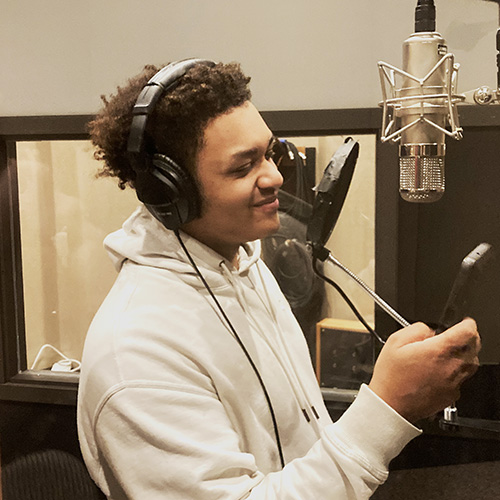
Cornell’s contemporary commercial music major evolved from observations of students’ creating music together and a Cornell Summer Research Institute project where music professor Nakielski built a recording studio in Armstrong Hall. This major equips students with the practical skills that can be used to gig out as working musicians, to prepare for advanced degrees in audio engineering or acoustics, supplement a major in business, or help entrepreneurs find their niche.
“One by one, I would see all these people waltz in [Armstrong Hall] with guitars, portable keyboards, or portable recording setups and just find a corner of the building to write songs when I was here late grading papers,” Nakielski said. “I thought to myself, and I would later bring it up to my department, what are we doing to serve these students?”
Live campus performances
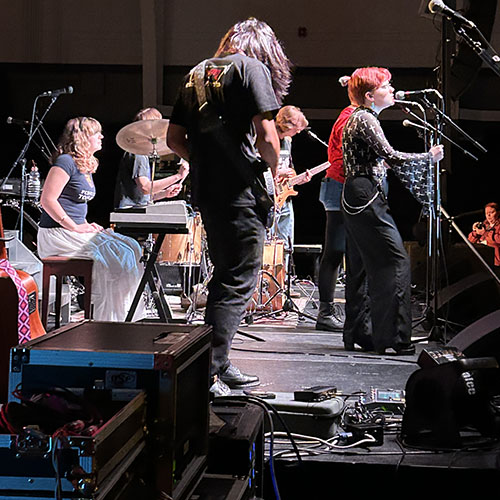
Our Pop Contemporary Band can be found performing for their peers all over campus, whether a crowd is gathered in Thomas Commons or they’re warming up the crowd for The Big Event in the SAW.
Contemporary commercial music course and degree requirements
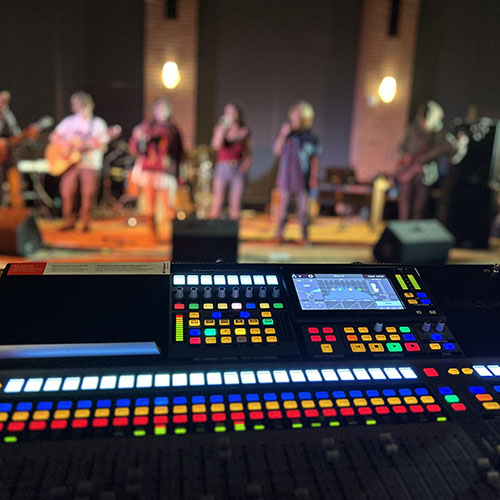
This program requires a foundation in music theory and exploration of musical genres as well as hands-on creation of music from writing to recording, mixing, and performance. You’ll have the opportunity to explore two levels of contemporary songwriting, audio engineering, and electronic music composition as well as more traditional courses such as vocal pedagogy and fundamentals of music.
To expand your talents in the way that most excites you, you’ll have the opportunity to take elective courses from Cornell’s theatre department offerings that meet your specific goals and interests such as sound design, lighting design, production design and filmmaking.
Contemporary commercial music capstone
Seniors pursuing a contemporary commercial music degree will be required to complete a capstone experience in their final year and may choose between a recital performance or a project in an area of performance practices or some phase of music history, theory, or education.
Internships in contemporary commercial music
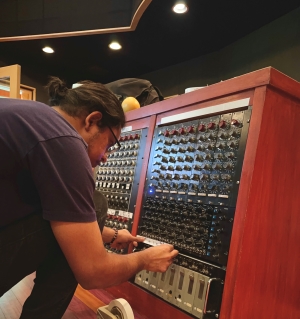
If you love being a part of the action in creating music, finding an internship at a recording studio might be exactly what you’re looking for. Lewis Fawcett ‘26 did his internship with WRW/Area 52 Studios/Hudson Valley Audio in Saugerties, New York where he got to work with a 40 year veteran in the music industry and learned the ins and outs of producing music…even if you don’t like what the client asks you to produce.
Oskar Diyali ’27 was an audio technician intern at Pachyderm Studios in Cannon Falls, Minnesota where he got hands-on experience with Pro Tools, the industry-standard Digital Audio Workstation (DAW) as well as how outboard gear impacts recording sound. He also noted that “One of the coolest moments these past two weeks was sitting at the fireplace where Nirvana once took their photo while recording In Utero.”
What are Cornell students doing in internships? Check out their blogs.
Career opportunities in contemporary commercial music
Your education in contemporary and commercial music supports careers in music performance, production, and education.
singer/songwriter
gigging performer
media and sync composer
worship leader or music minister
music producer
audio engineer
private instructor or teaching artist
studio owner
entrepreneurial artist
The Berry Career Institute can help you identify careers that match your personality.